
Diagnosis and Repair of Wheel Loader Transmission Faults: Practical Insights from AOLITE Technical Experts
Wheel loaders are core equipment for construction, mining and agricultural industries. The transmission, known as the "heart of the drive system", directly affects production efficiency and operating costs. Since its founding in 2005, AOLITE has specialized in the R&D and manufacturing of small and medium-sized construction machinery, and accumulated extensive experience in the application and maintenance of hydraulic torque converter drive systems. Based on decades of after-sales service cases from our technical team, this paper systematically introduces the identification, root causes, diagnostic methods and repair solutions for common transmission faults. It helps users troubleshoot accurately and extend service life of equipment.
I. Identification of Common Drive System Faults
Timely detection of abnormal conditions in the drive system is the first line of defense against high repair costs and unplanned downtime. AOLITE technical experts recommend conducting inspection promptly once any of the following symptoms occur:
Abnormal Noise: A sharp humming sound, metallic friction or abnormal noise during gear shifting may indicate gear wear, bearing pitting or internal faults inside the torque converter.
Stiff Gear Shifting and Power Lag: Stiff gear engagement, delayed shift response, or slippage during loading — where engine speed rises while the machine moves slowly with insufficient digging force — points to faults in the hydraulic control system or clutch assembly.
Transmission Fluid Leaks and Discoloration: Oil stains on the ground mean you need to inspect external seals and gaskets. A burnt odor, and/or milky white or dark brown discoloration of transmission fluid suggests fluid contamination or deterioration caused by overheating. The 265Y hydraulic transmission equipped on AOLITE loaders is particularly sensitive to fluid cleanliness.
Deteriorated Power Performance: Lack of power output under full load, poor climbing performance or obvious drop in work efficiency can be attributed to worn friction discs, blocked hydraulic lines or insufficient fluid pressure. AOLITE’s global-wide service network can quickly locate such latent faults in accordance with factory testing standards.
II. Main Causes of Transmission Failure
Based on massive after-sales statistical data, the AOLITE technical team has summarized four major causes of failures.
Fluid Contamination or Low Fluid Levels: This accounts for a large proportion of all faults. Foreign contaminants accelerate wear on gears and bearings, while insufficient fluid leads to poor lubrication and inadequate heat dissipation. Cross-leakage between the engine and transmission is generally caused by a damaged gear pump lip seal, which should be replaced in a timely manner.
Natural Wear of Key Components: Clutches, planetary gears, and bearings will gradually wear after long-term operation. Planetary gear power shift transmissions feature a complex structure, making fault diagnosis more challenging. We recommend carrying out dedicated inspections every 2000 to 2500 operating hours.
Improper Operation and Overloading: Overloading or rough operations will accelerate fatigue failure of internal components. Maintaining rated load capacity and avoiding prolonged high-speed idling are the most cost-effective protective measures.
Neglected Maintenance Schedules: Ignoring routine maintenance will turn minor issues into severe malfunctions. With more than 150 authorized sales and service partners within a distribution network covering over 40 countries worldwide, AOLITE provides genuine spare parts and professional maintenance guidance.
III. Practical Methods for Transmission Faults Diagnosis
The AOLITE technical team has established a diagnostic system combining professional tools and practical experience.
Thermal Imaging Technology: Perform non-contact scanning on the transmission housing and key components to detect local hot spots caused by abnormal friction and restricted fluid flow in advance. This supports scheduled maintenance and greatly cuts operational costs.
Visual and Auditory Inspection: Check gears for scratches and bearings for pitting, and distinguish abnormal noises via sound identification. During regular site visits, AOLITE after-sales engineers follow the standard inspection procedure: Look, Listen, Touch and Measure.
IV. Repair Decision: Self-Repair or Professional Service?
Light maintenance work (including fluid level inspection, bolt tightening and replacement of external seals) can be completed by operators with basic operational skills. However, complex work such as planetary gear set assembly, hydraulic valve body disassembly and torque converter overhaul requires precision assembly tools and strict compliance with the manufacturer’s torque specifications. Non-standard disassembly and assembly will result in secondary damage to components.
All AOLITE standardized service outlets are staffed with certified technicians, who deliver standard repairs fully compliant with factory requirements. Please contact the AOLITE after-sales service team immediately in case of emergencies.
V. Important Considerations for Component Replacement
If the transmission suffers severe wear and its performance cannot be restored through simple repairs, component replacement is required, and three core principles must be followed:
Prioritize Genuine or OEM Parts: The dimensions and material properties of critical components including friction discs, external seals, bearings and gears directly determine assembly accuracy and equipment reliability. All AOLITE genuine parts have passed bench endurance tests and machine fit validation, with a stable and sufficient global supply.
Strict Installation Procedures: Even premium quality parts may suffer premature failure due to improper adjustments coaxially or non-compliant bolt torque. All assembly and repair work must be performed by factory-trained and certified professional technicians.
Reliable Spare Parts Supply: For equipment with long service life, in-stock spare parts directly affect repair lead time. AOLITE operates national centralized parts warehouses and overseas storage facilities, serving clients across more than 50 countries and effectively shortening waiting time for repairs.
VI. Preventive Maintenance Plan
Preventive maintenance aims to monitor equipment operating status, arrange planned downtime, avoid major mechanical failures and collateral component damage, as well as fixing minor issues at an early stage to reduce overall maintenance costs. The AOLITE technical service team recommends building a complete preventive maintenance system focused on the transmission.
Strictly Follow Fluid Service Intervals: Replace transmission fluid and corresponding filters regularly in accordance with the operation manual. Standard fluid management can extend the transmission’s service life by over 30%.
Regular Inspection of Standard Components: Apart from fluid replacement, check fluid pressure, shift response and cooling systems during each routine service inspection. Shorten inspection intervals appropriately if the equipment operates under heavy loads or harsh working conditions.
Standardized Operator Training: Prohibit harsh acceleration, prolonged high-speed operations under light load and overloading. Standardized operations can greatly reduce mechanical failure rates.
Establish Equipment Technical Files: Record maintenance time, service contents and abnormal conditions for each AOLITE loader, so as to realize full-lifecycle scientific management of all equipment.
VII. Conclusion
The operating status of a wheel loader's transmission directly affects equipment uptime, operational efficiency, and overall operating costs. By accurately identifying early signs of failure, deeply understanding the causes, applying scientific diagnostic methods, and establishing a standardized preventative maintenance system, users can significantly improve equipment reliability and reduce unexpected downtime and repair costs.
From product design to global after-sales services, AOLITE always adheres to its brand philosophy: More Reliable, More Practical, More User-Friendly. As emphasized in our global service team training, professional competence is built on systematic knowledge accumulation and rich field experience — from mastering full product workflows to solving complex technical problems independently. Every engineer in the AOLITE technical service team receives rigorous professional training and provides reliable technical support at all times. Choose AOLITE, and you are effectively choosing long-term and dependable protection!
Recommended News
Hot News
-
Trusted AOLITE in Europe
2024-05-08
-
INTERMAT 2024, International Construction Machinery and Building Materials Machinery Expo in Paris, France
2024-04-26
-
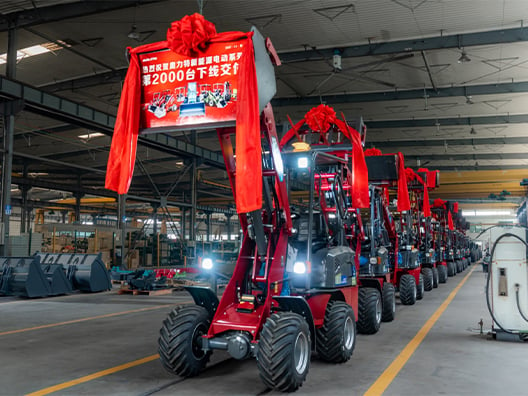
The 2000th unit of AOLITE New Energy Electric Loader rolled off the production line and delivered: Review, current situation and prospects
2024-04-25
-
AOLITE Electric Loader Milestone: The 2000 th off-line delivery
2024-04-25
-
AOLITE 2024 new arrival ETL600 eletric telescopic mini loader,new energy high efficiency four wheel drive telescopic loader
2024-02-19
-
AOLITE backhoe loaders official enter European markets with EU stage V engine
2024-06-27
 Consult